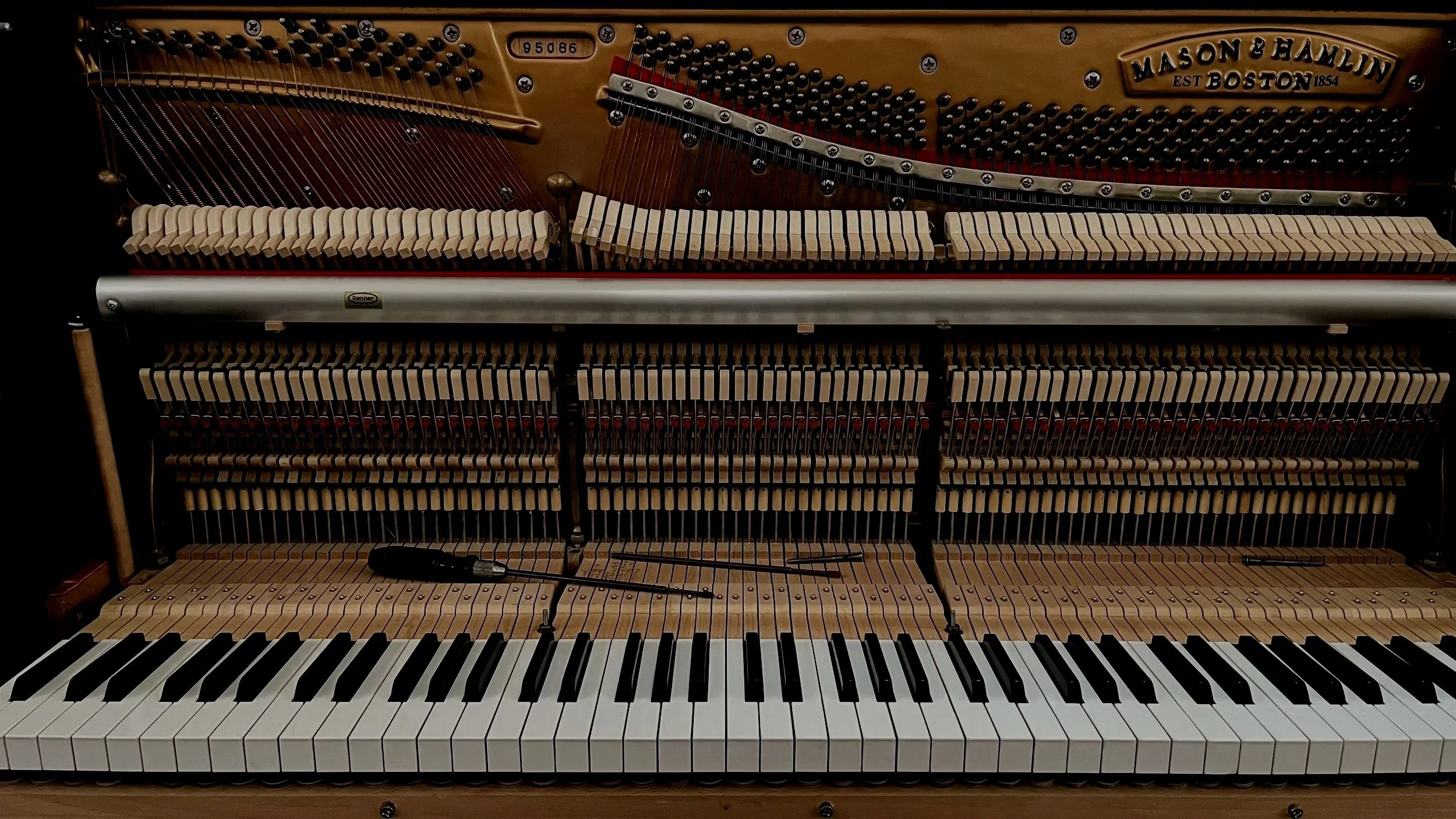
Tuning & servicing for the modern piano
Making pianos more enjoyable, playable and expressive.
Services
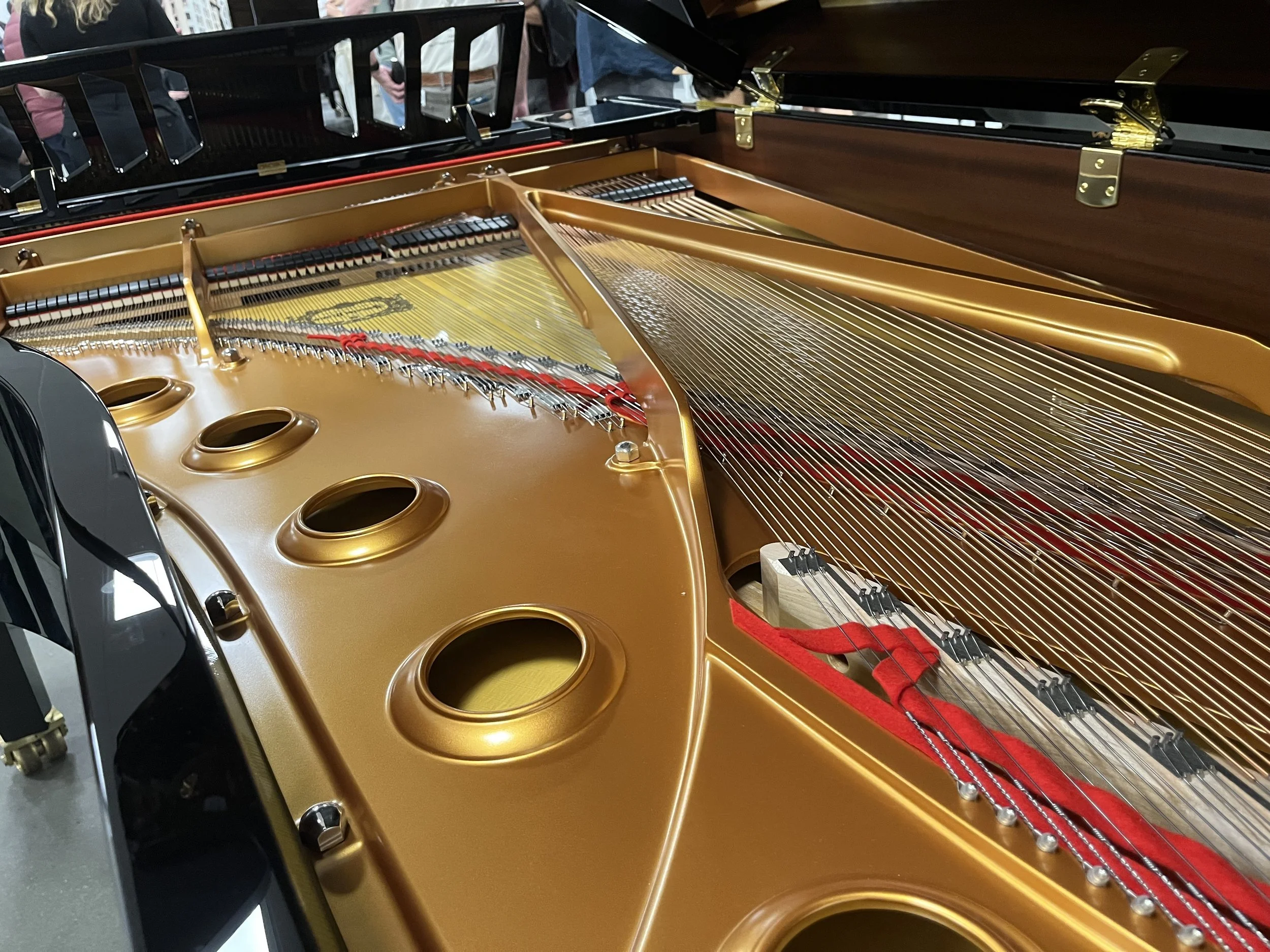
Tuning & Maintenance
$200
Why is this necessary?
Pianos are organic instruments living under thousands of pounds of tension. Over time, humidity and temperature fluctuations cause the pitch to drift, while mechanical parts "settle" and lose efficiency. This is the baseline care required to maintain the structural and musical integrity of your instrument.
Who is this for?
Every piano
What’s included?
A holistic approach. Unlike a quick "tune-and-go," my standard service includes minor voicing (smoothing out the tone), regulation (adjusting the touch an), and minor repairs, if time permits.
Preventative care. By seeing your piano regularly (1–2 times annually), I can address wear patterns before they turn into costly breakages.
If the piano has not been serviced in over a year, it may need a pitch adjustment, which basically just means it needs to be tuned multiple times. +$65 for pitch adjustments.
Internal Cleaning
$100
Why is it necessary?
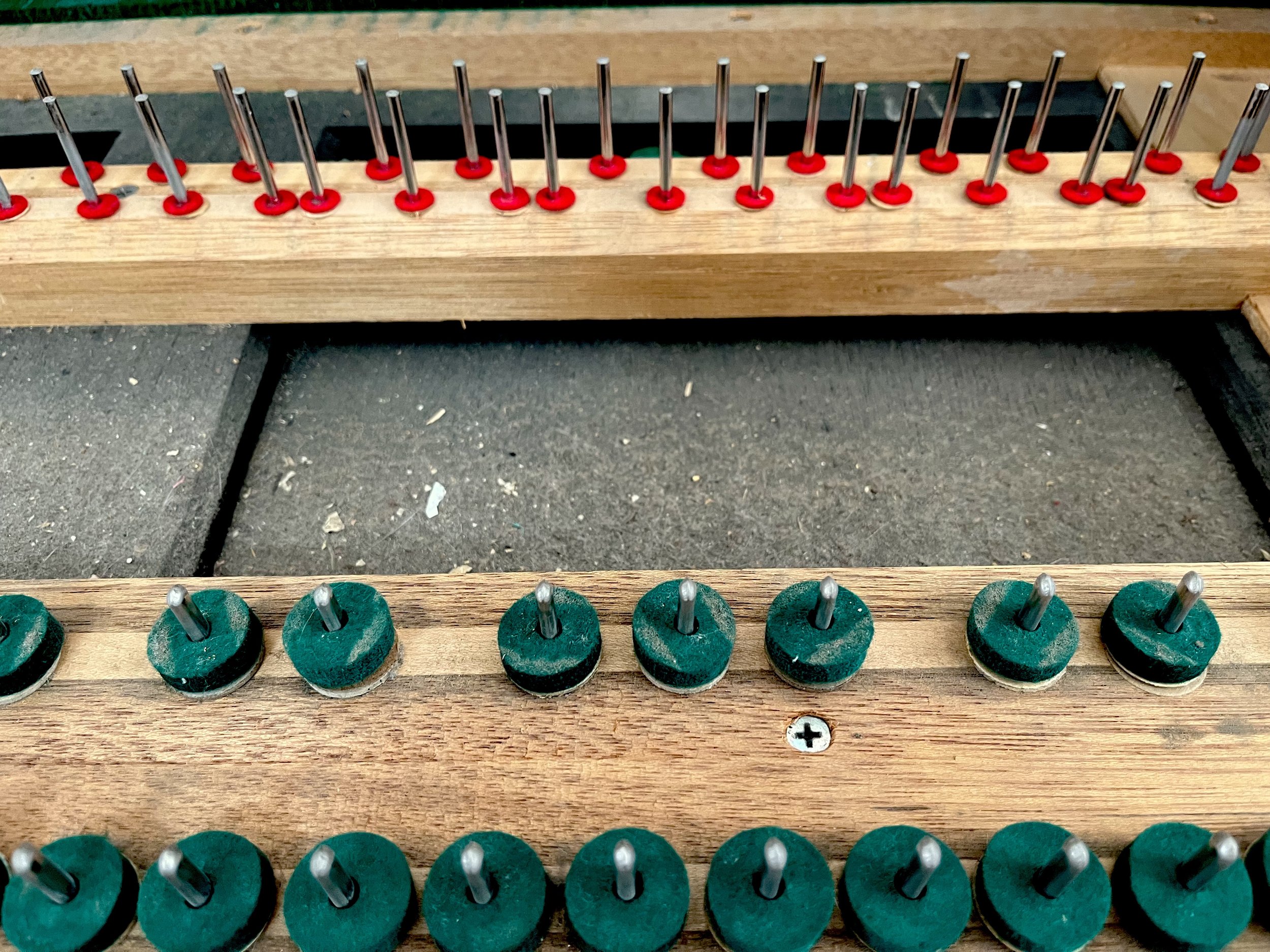
Pianos are dust magnets. However, household vacuums can inadvertently damage delicate dampers and action parts. A trained technician knows how to safely "excavate" the action to clean areas you cannot reach.
Who is this for?
Anyone with a dusty piano or allergy concerns.
What is included?
Grand Pianos: Removal of the action to clean the action cavity and soundboard. I use specialized tools to brush and vacuum dust and debris from around the tuning pins and under the strings.
Uprights: Cleaning the key bed (under the keys) and the bottom pedal cavity.
PianoDisc Installation & Service
PianoDisc is the leading piano player system in the world and with its latest technology in the Prodigy II system, it can accurately replicate every nuance of a professional pianist'‘s performance right in your living room.
Contact me for pricing of installation, upgrade or service. Yes, I am a certified PianoDisc installer/technician.
Want to know more?
What should I expect during my first appointment?
Plan for a slightly longer visit (2.5–3 hours). Because I haven't seen your piano before, I need to assess its baseline health. I will assess the pitch deviation—if the piano is significantly flat, it may require a "pitch raise" (a rough tuning) before the fine tuning can be stable.
My philosophy is value-driven: if I finish the tuning early, I utilize the remaining time to perform regulation and maintenance at no extra cost, ensuring your piano sounds and feels better than when I arrived.
How should I prepare for the appointment?
Clear the Deck: Please remove picture frames, lamps, and sheet music from the top of the piano.
Space to Work: I will need a small, low-traffic area nearby to place the case parts (panels) I remove during service.
Quiet Time: High ambient noise makes it difficult to hear the "beating" of the intervals. A quieter house ensures a more precise tuning.
Pet Policy: I love animals! They are welcome to supervise, provided they aren't too helpful 🐶. Birds that are very talkative, will politely be asked to temporarily be moved.
I just moved my piano. Do I need to tune it immediately?
Yes, but not instantly. Moving alters the tension on the frame, but the piano also needs to adjust to the humidity and temperature of its new home.
Recommendation: Let the piano acclimate for about 3 weeks after the move. This allows the wood to settle, ensuring the tuning remains stable for longer.
Do I really need to tune it 1–2 times a year?
"Need" is subjective, but if you want the piano to hold value and sound musical, then yes. A piano that sits untuned for years will drop significantly in pitch. Bringing it back to concert pitch becomes a multi-step, unstable process. Regular maintenance keeps the piano in equilibrium, meaning it will hold its tune for longer.
What makes of pianos do you service?
If it has 88 keys and strings, I can likely help. I work with all major brands, including but not limited to:
Concert Level: Steinway & Sons (and sub-brands Essex/Boston), Mason & Hamlin, Yamaha, Kawai.
Home & Upright: Baldwin, Samick, Young Chang, Wurlitzer, Schafer & Sons, and many more.
Vintage: If your piano was built before 1900, please let me know beforehand so I can assess if I can service it.
What is your service area?
I am local to Carmel Valley, Rancho Penasquitos, Forrest Ranch, Rancho Santa Fe, Del Mar and Mira Mesa. I will gladly see pianos in the greater San Diego County area as far south as Chula Vista and as north as Fallbrook. Anywhere within a 40 minute drive from the 56 is fair game.